3 – 5 years

Preschool

The Montessori children's house: a prepared environment where children move from simple work to more complex work, at their own pace.

A prepared environment

The Montessori classroom is a prepared environment that invites children to be active explorers. Knowledge is offered through scientifically designed materials, trained staff, and presentations.

Each child progresses from simple activities to more complex ones. Curiosity is met with real work, and children begin to feel the joy of discovering the world around them.

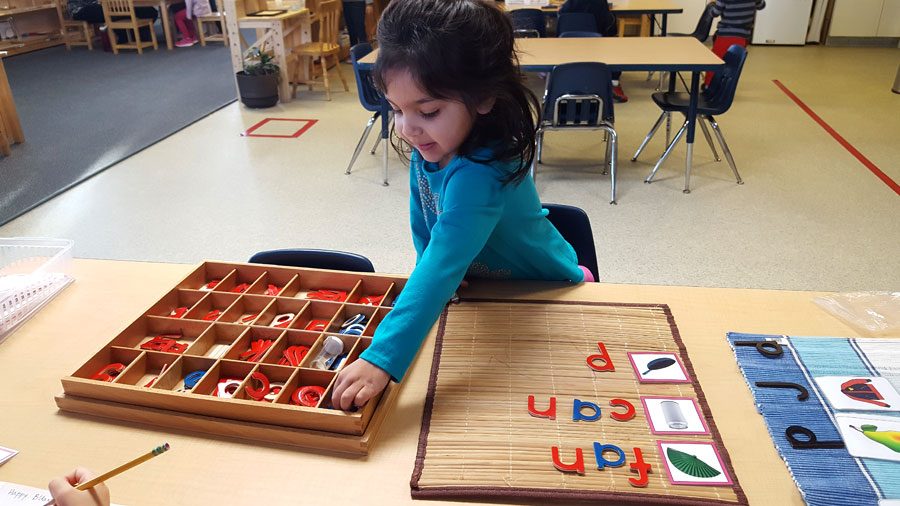
In the 3 to 6 language curriculum, writing is taught before reading. Practical life and sensorial work prepare the hand and the mind, and writing itself is direct preparation for reading.

What children work with

  • Practical life: pouring, dressing, cleaning up, and grace and courtesy
  • Sensorial work: sequencing, ordering, and classifying
  • Language, with writing taught before reading
  • Mathematics: counting, number relationships, and the decimal system
  • Cultural studies: geography, botany, zoology, history, science, music, art, and nature

Offered at

The classroom

Five areas of Montessori work

Children meet these materials every day, moving from simple exercises to more complex ones.

Practical Life

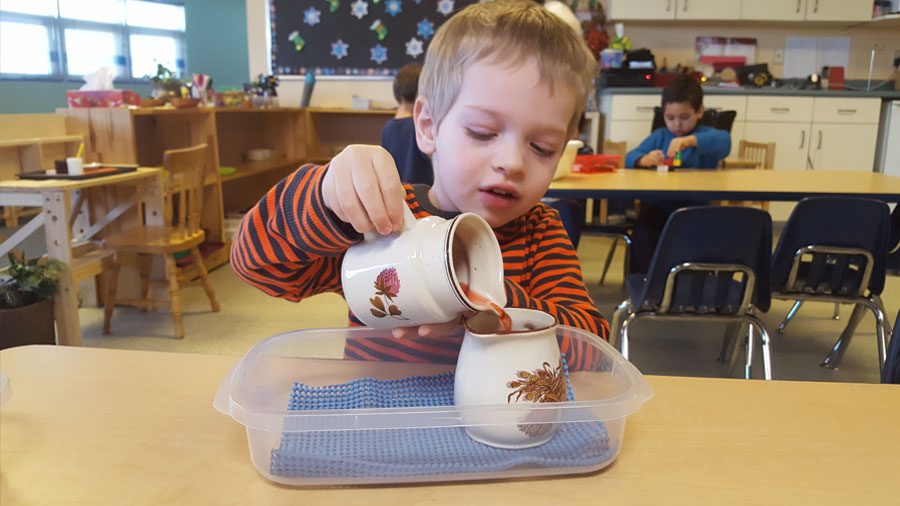
Practical life is the foundation for the rest of the classroom. Purposeful work such as pouring, spooning, dressing, cleaning up, and grace and courtesy helps children take care of themselves, other people, and the room. Along the way they practise respect, patience, confidence, and independence.
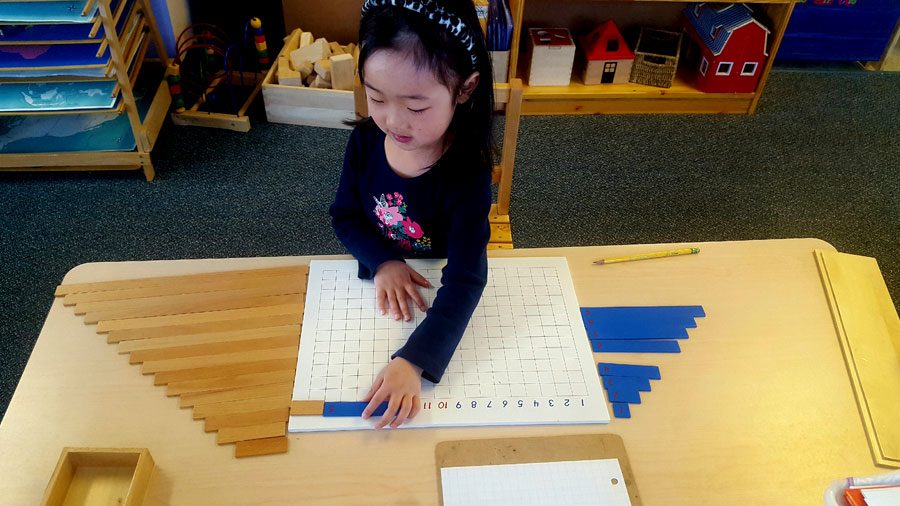
Sensorial

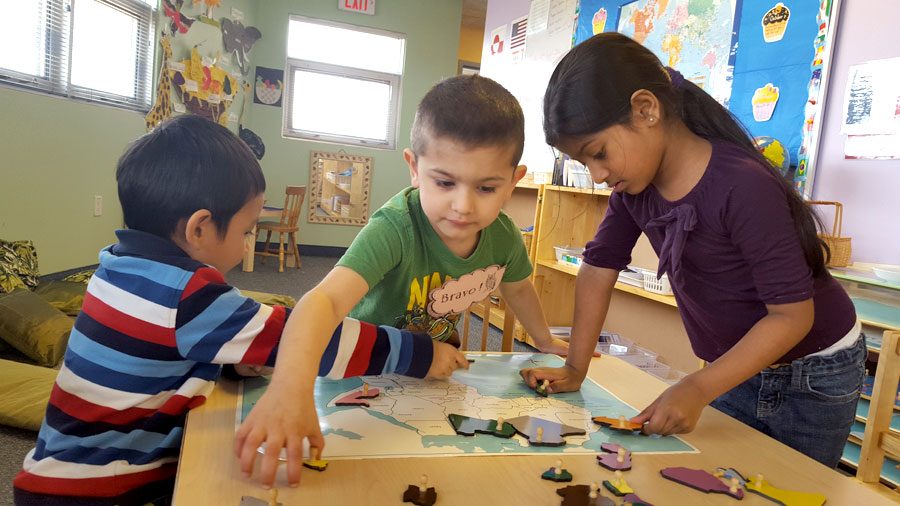
Sensorial materials refine a child's sense of discrimination. The exercises help children sequence, order, and categorize what they notice, so abstractions become something they can work out for themselves. Children repeat the lessons and soon make their own variations.

Language

Language work builds vocabulary and prepares the hand for writing and reading. Children construct language by doing, not by sitting and being told. Writing is taught before reading. In the 3 to 6 curriculum, writing is direct preparation for reading.

Mathematics

Mathematics work covers counting, number relationships, and the decimal system. The materials lay the groundwork for later, more abstract mathematics, and for sound reasoning and problem solving.

Cultural

Geography, botany, zoology, history, science, music, art, and nature study make the classroom lively and connect children to the wider human family. These themes give children a way to picture the world as a whole.

Included with the program

The Enhanced Montessori Program

Music, French, yoga, the gym, and food are part of the day, not an add-on.

Kinder Music

Music and movement introduce children to the language of music in a collaborative setting. Singing, storytelling, dancing, and instruments support musical development, and also social interaction, impulse control, spatial awareness, and focused listening.

French

A visiting teacher introduces Canada's second official language, starting with numbers and colours and moving on to animals and foods. Lessons use Montessori language and math materials, with songs and dancing.

Kids Yoga

Yoga is introduced with music, games, stories, and simple poses, in a light-hearted way. Play and personal discovery help children find the poses for themselves, in a setting meant to build on their strengths and confidence.

Use of the gym

Full-day and half-day children use the gym as part of the Enhanced Montessori Program.

Healthy snacks

A balanced snack is served at school. It is planned so it is safe for the children attending, and the month's snack menu is posted on the bulletin board.

Hot lunch

A daily hot lunch gives children a freshly prepared meal at school. Mealtimes are also a chance to practise healthy eating habits and independence at the table.

July and August

Summer Program

The summer program runs through July and for three weeks in August. It is different from the school-year program. Every two weeks there is a new theme, and the class spends as much time as possible outside, playing, exploring, and discovering. The classroom is set up to match the theme, with art and craft work planned for those weeks.

The prepared environment stays in place, and so do independence, grace, and courtesy. Most of the activities themselves change. Children still have individual and group experiences suited to their age.

Outings

  • Farm
  • Assiniboine Park Zoo
  • Splash pad
  • Special guests
  • Neighbourhood walks
  • Conservatory
  • Aviary Museum

Occasionally at the centre

  • Water Day
  • Bouncy Castle Day
Preschool

See this classroom in person

A visit is the clearest way to understand the day.